

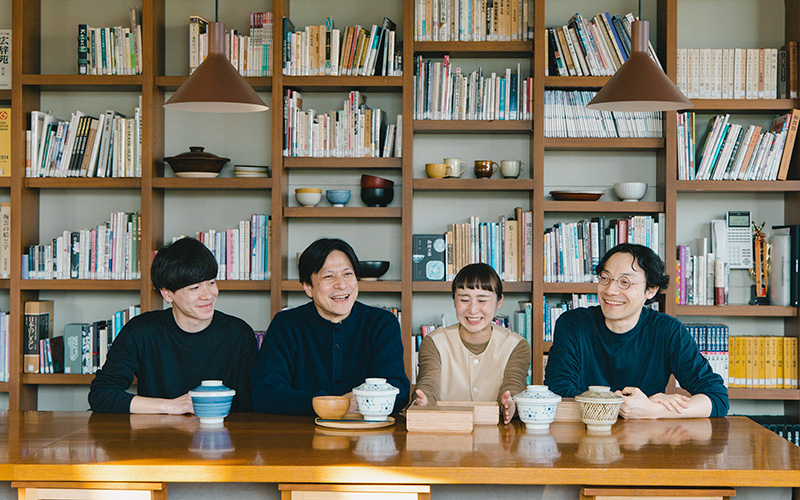
“We want the people who matter to us to enjoy their meal. We want to spend a good time together.”
Traditional Japanese tableware carries within it a sense of care for others.
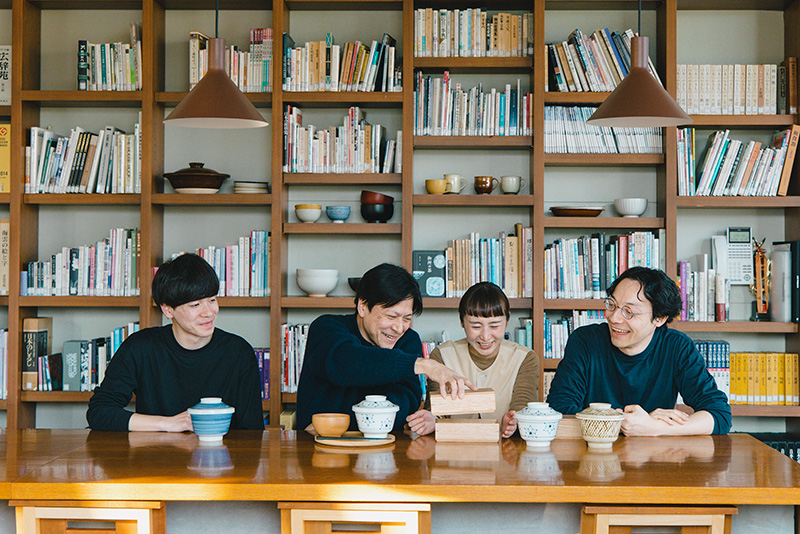
With that in mind, a group of craft designers with a deep love of tableware came together to reinterpret Japanese vessels for contemporary life, and to share their appeal and enjoyment afresh. This became the beginning of the Utsuwa Laboratory.
Its members are Oji of Oji & Design, and Enomoto, Iwai, and Okubo from Nakagwa. These four meet regularly to exchange ideas, and at times visit production regions to think closely about Japanese tableware. The first item they created through this process was a lidded vessel.
Now, with the release of two new pieces as contemporary expressions of lidded tableware—the Tamate Donburi and the Omekashi Jubako—we held a roundtable with members of the Utsuwa Laboratory. We asked about their usual activities, their thoughts on tableware, and the challenges of developing these products.
Creating tableware that conveys the joy of craft
—How did the Utsuwa Laboratory begin?
Enomoto: We were discussing what kind of tableware we should make in future, and through that process we came to know Mr Oji, who has created many tools for daily life as a handcraft designer rooted in production regions. That was the starting point—we wondered whether we might ask for his advice. From there, this group came together and the project began in April 2025. Since then, we have met almost every month and visited production areas together.
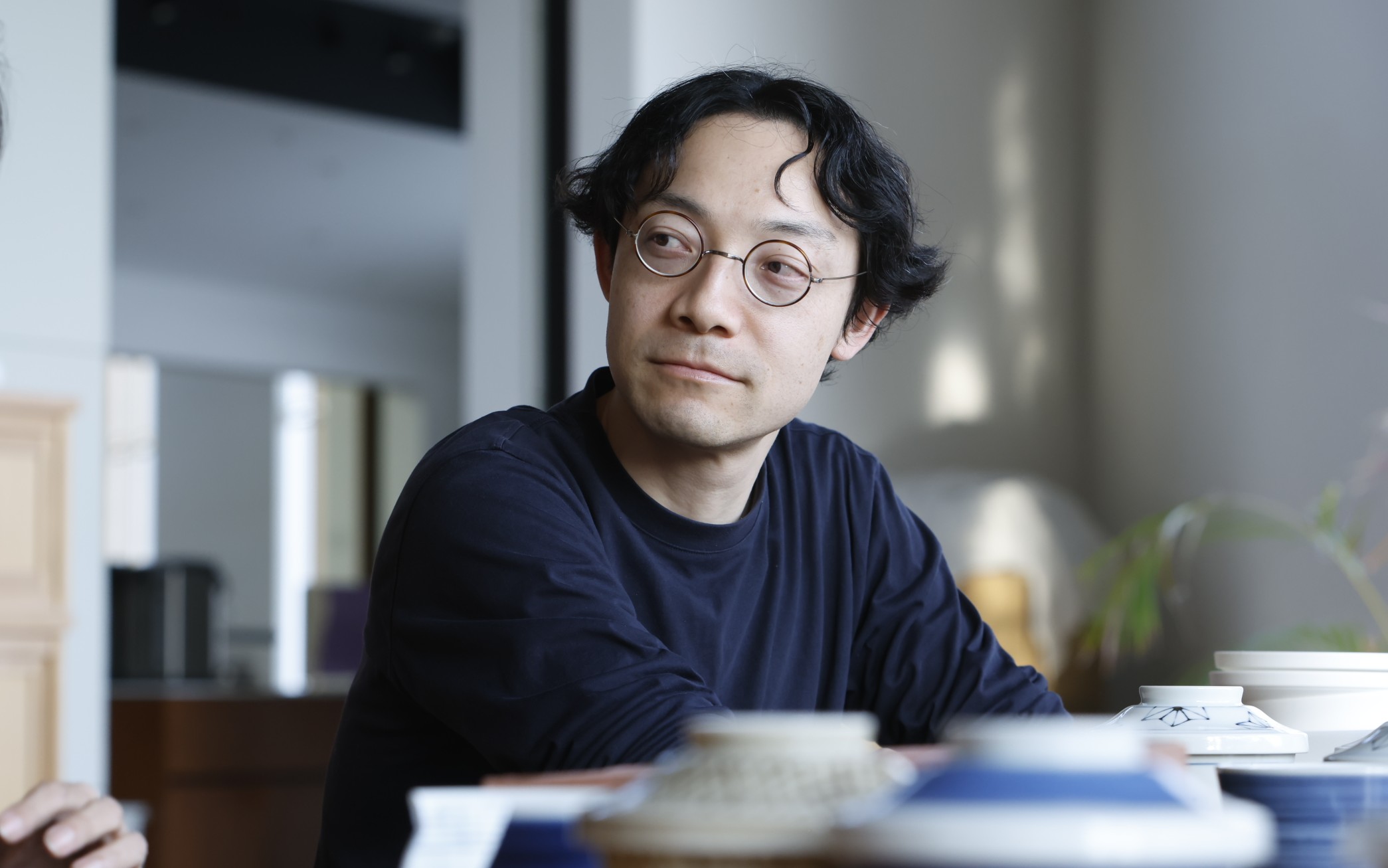
Oji: When starting the Utsuwa Laboratory, what I said to everyone was that perhaps it would be good to make tableware with more of a Nakagwa character.
Looking at the products in the shops, you could feel the wish to support the production regions, and they had a good presence. But at the same time, I also sensed a certain restraint.
When you stay too close to the production area, it becomes, “This region makes bowls, so let us make bowls again this time,” and the means begin to replace the purpose. Rather than that, I wanted us to make proposals that ask, “If we think about what it means to use Japanese tableware in this day and age, perhaps what is needed is not an ordinary bowl, but something like this.”
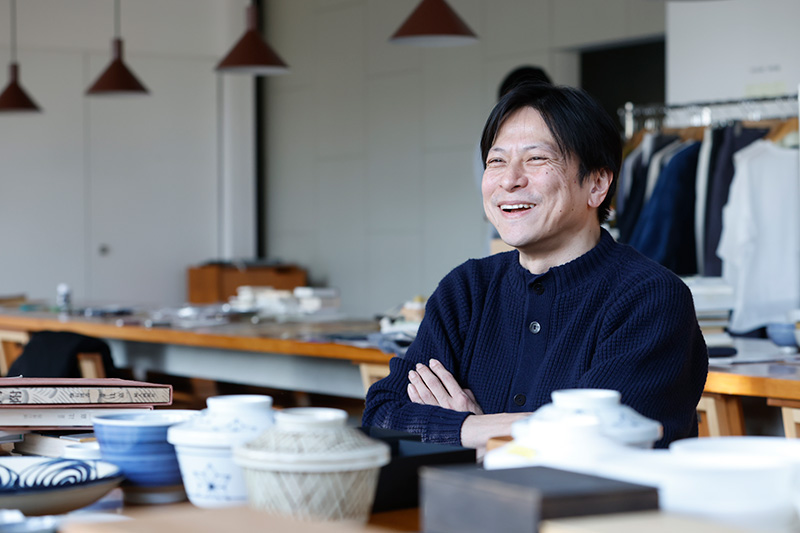
Okubo: I do think we have become fixed in that way of thinking—“This region is good at making this kind of thing, so that is what we should make.”
Of course it is important to make use of what a production area does well. But by stepping back and looking more broadly, you can see more clearly what is truly needed, and sometimes that can even bring you closer to the makers. Through the activity of the Utsuwa Laboratory, that was something I came to realise.
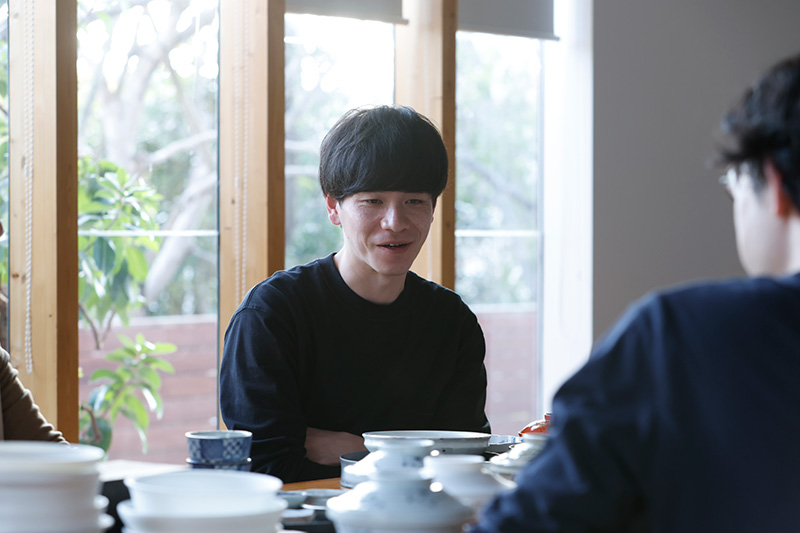
—Why did you choose lidded vessels as the first release?
Oji: When we discussed what felt most true to Nakagwa, the conclusion was that it lay in revitalising craft. And if we are to do that, perhaps it would be good to make tableware that conveys, “Craft is enjoyable.”
Not simply something that is “easy to use”, but something that makes you want to learn how to use it well. We felt it would be good to make things through which the customer changes a little, actively, through using them.
Lidded vessels were once necessary in an age before microwaves and refrigerators, helping to keep food warm and serving as useful storage containers.
Times have changed, and those forms, so particular to Japanese tableware, are no longer essential in the same way. But for instance, when you lift the lid and steam rises from the food, there is a small moment of wonder. If you shift your perspective like that, there must still be many ways in which the presence of a vessel can become a source of joy and delight. We wanted to go in search of those.
Enomoto: When we were thinking on our own, we had not yet arrived at the idea of proposing tableware with lids. Working with Mr Oji helped us realise that this aspect itself could become a source of enjoyment and value, and that felt like a real gain.
At a time when there is some distance between Japanese life today and Japanese food, we felt there might be moments when people rediscovered the pleasure of a meal through the vessel itself. That is the kind of thing we wanted to make.
Iwai: A lid means two things to wash, and from a making point of view it also becomes more complex, so it is easy to see it in a negative light. The idea of choosing instead to enjoy that positively was something of a revelation. It made immediate sense to me.
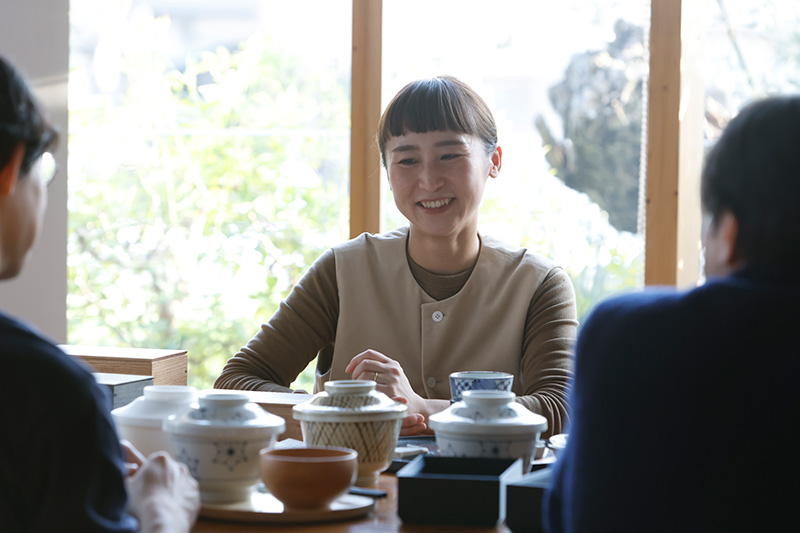
Making Japanese tableware in which emotion holds a slight advantage over convenience
—How did you approach the development of Tamate Donburi?
Oji: When we considered whether a lidded donburi might fit naturally into life today, we imagined things like preparing a meal for a family member coming home late, serving the rice, placing it on the lid, and putting it in the fridge so that it could simply be reheated as it is. It seemed surprisingly suited to that sort of practical convenience too—without even needing cling film.
Because the lid sits over the bowl, it looks compact but actually holds more than you might expect, which also makes it easy to use. I think that is something Enomoto really achieved by refining the design and sizing in great detail.
At the same time, there is the emotional pleasure of lifting the lid and seeing the steam rise. We cared very much about that balance—where usability is there, but in the end it is the emotional quality that gently wins.
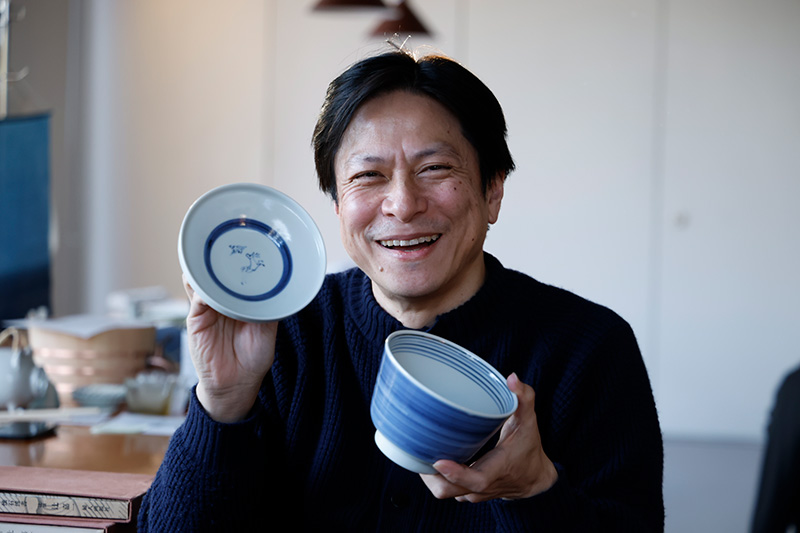
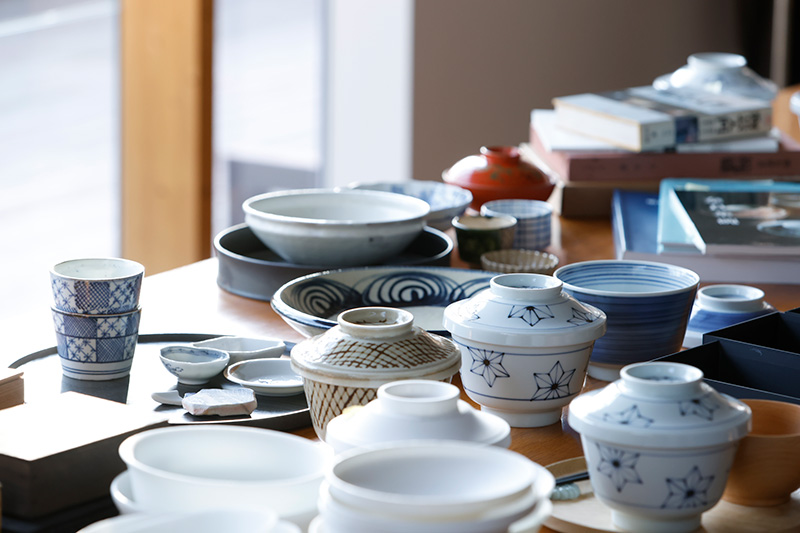
Enomoto: On my side, I spent quite a long time thinking about the size. How could it feel approachable? How could it feel familiar?
We made the form closer to a straight-sided shape so that it would hold a good amount, while also making it easier to serve rice into.
Oji: It looks ordinary, but it really is not ordinary at all.
Enomoto: That is right (laughs). I am very fond of the form of the lid itself. It is the kind of shape that feels as though it ought to exist, yet somehow does not. And after all, when the lid is beautiful, I think it heightens the pleasure of opening it. I even went to museums to research Nara chawan bowls. We really did make it through a process of study.
When I actually tried using it with food inside, the moment the steam rose was truly beautiful. I hoped people would have that experience for themselves.
With the decoration too, we intentionally aimed for a glaze that would blur slightly. It was good to be able to work with the maker to achieve that effect, where each piece looks a little different. Things that still hold traces of the hand are always more interesting.
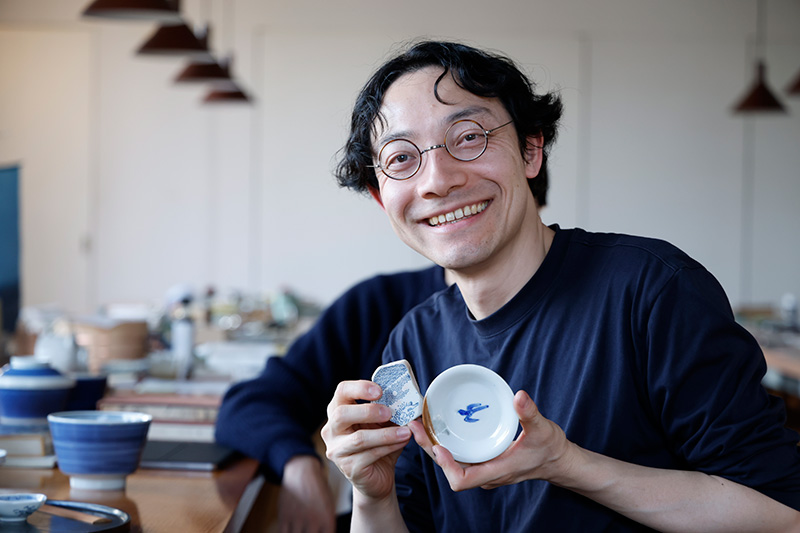
—And what about the Omekashi Jubako?
Oji: That was difficult. At first we were thinking about everyday usability, but in the end we moved quite decisively towards the hare side of things.
Iwai: We went round and round trying to find the balance between hare and ke (laughs).
When we thought again about the nature of the jubako, it has always been a vessel used when enjoying time with others—at cherry blossom viewing, school sports days, or for New Year dishes.
As we began to realise that, it felt more and more as though it belonged on the hare side after all. Not only for New Year, but with a kind of specialness that makes you want to use it at small celebratory moments within ordinary life—that was when it really fell into place.
I also used it at home almost every day during development, thinking things like, “Perhaps this is a little too small,” or “If only it were another 5mm, I could fit two more small dishes in.” It was developed whilst experiencing the pleasure of learning how to use it well. I hope others too will find that kind of enjoyment through using it.
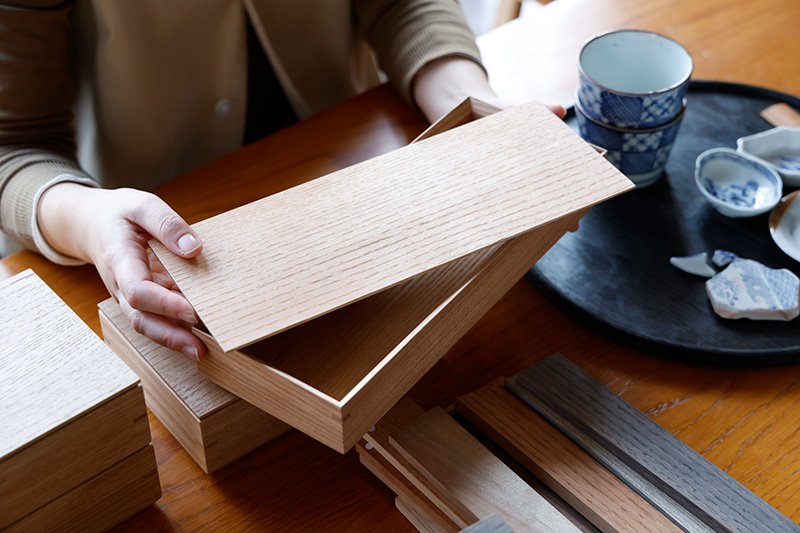
Oji: I am truly glad we did not give up and saw it through to completion. So that food would look beautiful inside it, we cut the rim of the lid at an angle, and even that angle was carefully refined so that the lid would not slip. The attention to detail is thorough.
In terms of shu-ha-ri, it may be something like a platform that helps a customer in the “shu” stage make the leap towards “ha”. I think it has become that sort of product.
Making everyday life more enjoyable with tableware shaped by care for others
—What did you come to realise through engaging with Japanese tableware this time?
Enomoto: I felt that in the design and forms of Japanese tableware, there has long been deep thought about how to serve food to someone important, and how to enjoy that moment together.
There is a lid because you want them to eat while it is still warm. There is the steam that appears when the lid is lifted, and even the surprise of finding a small painting on the underside. These are all ways in which care for someone has been given form. I feel that if we continue to explore that more deeply, new values may emerge.
Oji: I think it would be wonderful if decoration were not seen as something negative, but rather as a form of care. You decide on that line or that design because there is a feeling you hope someone will have, or a way you hope to feel yourself.
If the line is soft, then perhaps it will bring about a softer feeling too.
Iwai: With the Omekashi Jubako as well, when I brought it out at home during development, people reacted with a kind of “Oh!” at the sight of something different from usual.
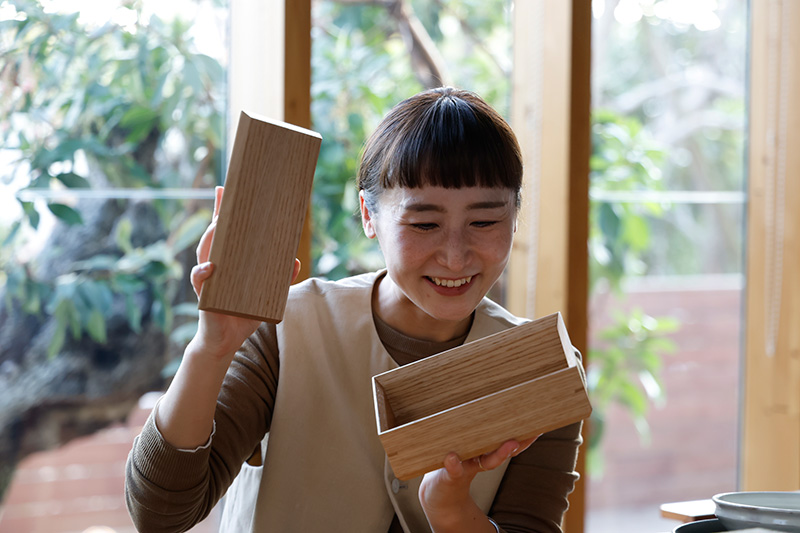
Oji: It brings joy, does it not?
Iwai: Yes, there is a sense of joy, and the atmosphere of the place changes. I genuinely felt it had that kind of power. But more than that, I thought there was something rich in the way it could sit alongside our usual tableware without feeling out of place.
Even one piece can change the atmosphere, but if the sense of difference is too strong, it becomes difficult. So whilst working on it, I kept feeling that if the Utsuwa Laboratory could gradually add one piece, then another—things that are properly loved and continue on—they might gently blend into life in a healthy way.
Okubo: For me, working with this team, visiting different places and having repeated discussions, changed my thinking about design a little.
When designing, I usually proceed with an ideal in mind, thinking, “This sort of form is beautiful.” But because the finished object is shaped by the nature of the material and the character of the maker, it never turns out exactly one hundred per cent as designed. At those times, rather than thinking, “This differs from the design, so it should be corrected,” I found myself thinking, “Actually, this is better.” I feel I have gained a sense of how to judge why the finished piece is better than the original design.
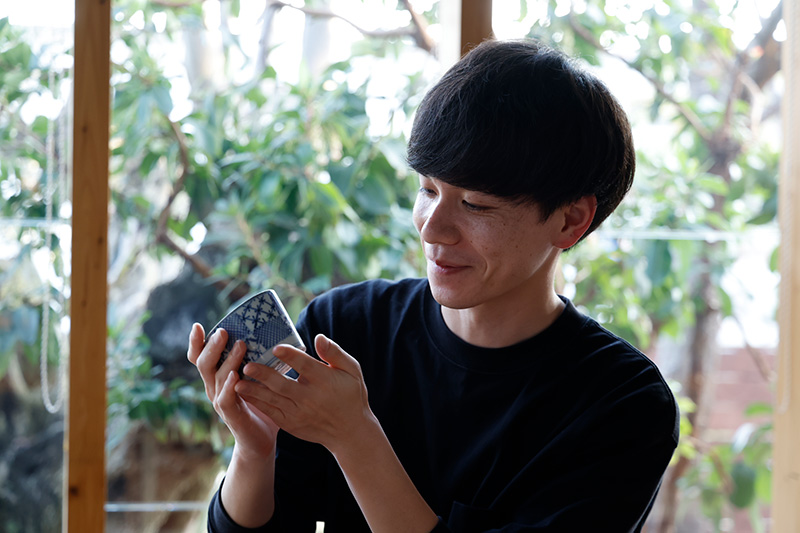
Oji: I think that is a very good change. Making something exactly as designed is not really what making is. A design changes as it is affected by many things along the way, and if the result is better, then that is perfectly fine. If you have the openness to accept that, you begin to blend with the maker and the material, and to make things together. It is a matter of guiding whilst also not wanting to control too much. I think that is important when making something good.
Okubo: I also felt again that perhaps things do not always need to be universally easy for everyone to take to. It may be better if the character of the maker comes through more strongly in the object itself.
Oji: I usually work on my own, so for me it felt almost like, “At last, I have fellow craft designers.” When I talk about makers, artisans, or production regions, those around me often simply say, “I see.” But with these three, there is a feeling of, “Exactly.” There is real understanding.
And with the products too, if I said, “Something here feels slightly off,” the detail would actually come back adjusted. It was a very responsive process, in that sense. It was genuinely enjoyable.
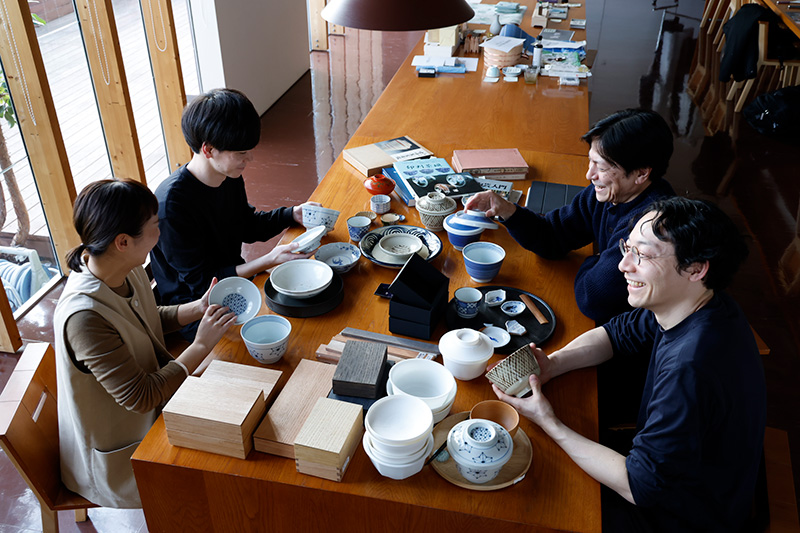
Enomoto: We also learned a great deal from seeing how Mr Oji communicates in the production regions and how he makes things. I feel we have found some real confidence that this can make everyday life more enjoyable, so I would like us to continue this effort to make Japanese tableware more interesting.
<Related products>
・Tamate Donburi
・Omekashi Jubako
Text: Yuta Shiraishi
Photography: Takayuki Abe
![Akiko Nagao of minokamo on a Table Set Around “Lifting the Lid” [Omekashi Jubako Edition]](http://nakagawa1716.com/cdn/shop/articles/H1_7859-1_c7cc972b-b4b9-427c-93fb-7adbee4160ec.webp?v=1783934968&width=1066)


