
![Akiko Nagao of minokamo on a Table Set Around “Lifting the Lid” [Omekashi Jubako Edition]](http://nakagawa1716.com/cdn/shop/articles/H1_7859-1_c7cc972b-b4b9-427c-93fb-7adbee4160ec.webp?v=1783934968&width=1900)
Even an everyday dish can lift the heart, simply by changing the vessel.
With that hope of offering tableware that brings a little more pleasure to the table, Nakagwa has created a new kind of lidware for this spring.
Lidded vessels are often found in traditional Japanese tableware, yet if you look in your cupboard at home, there are probably very few. In daily life today, opportunities to come across them seem rather rare to begin with.
And yet, once you try using one, both the pleasure and the practicality that come with a lid are greater than expected. The moment of lifting the lid can turn an ordinary meal into something that feels special.
The piece we are introducing this time is the Omekashi Jubako.
Wanting to share the happiness of “lifting the lid”, we visited food writer Akiko Nagao, who works under the name minokamo, and asked her to try it ahead of its release. She also shared some reassuring ideas on how to pair it with food, even for those using lidded vessels for the first time, so we hope you will find them helpful.
Nagao-san and her relationship with lidded vessels
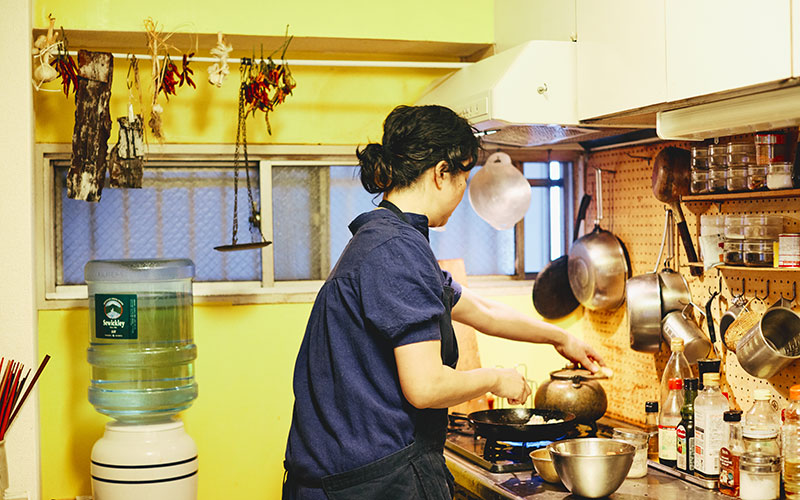
Nagao-san’s table has a gentle warmth, shaped by regional cooking and everyday dishes. The appearance of each plate, never confined to a fixed form, and the way she arranges food upon it, are filled with something distinctly her own.
The dishes she proposes feel approachable and true to daily life, yet each one seems touched by a kind of quiet magic. It reminded us of the warmth one senses in the subtle irregularities unique to craft.
That sense shines not only in her cooking. Her choice of tableware, too, has a certain openness, and the vessels in the Nagao household each have a richly individual expression.
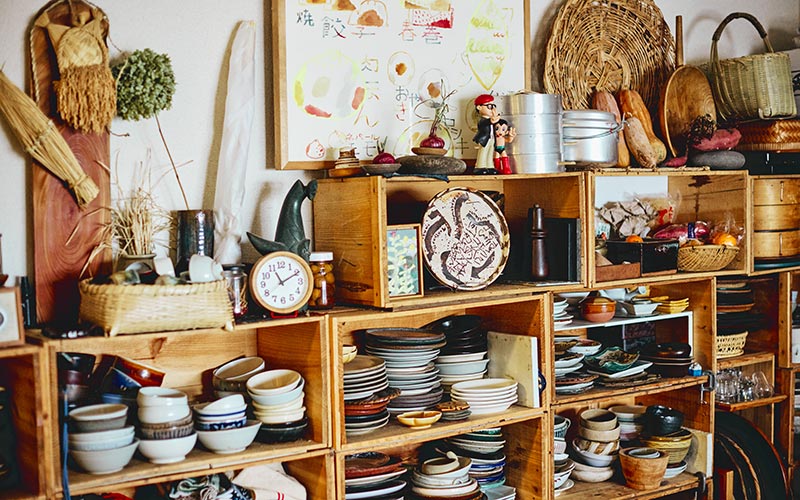
“Some of my tableware comes from makers I happen to have a connection with, and some I find whilst travelling. Sometimes pieces are passed on to me by friends or acquaintances, and even with vessels that come to me in that more unexpected way, there is always something new to discover, which I enjoy.
At the moment I divide my time between Tokyo and my home region of Gifu, and in Gifu I also have many vessels that my grandmother used for years.”
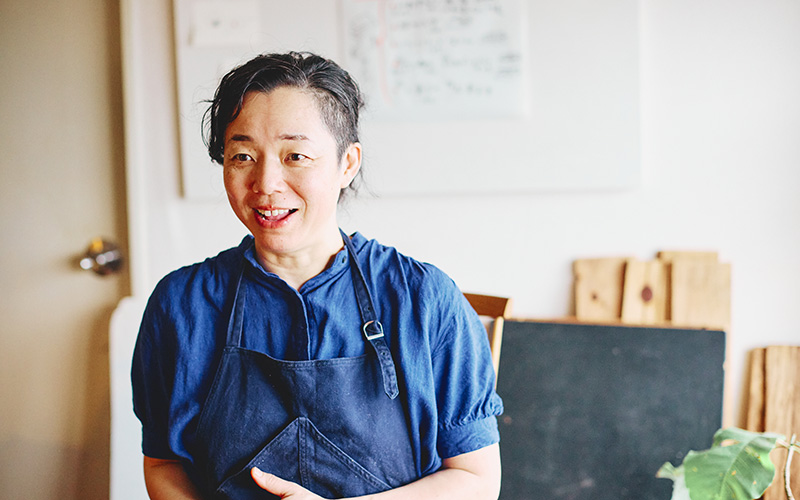
Nagao-san, in fact, is already very familiar with using lidded vessels. By using them not only on special occasions but also in everyday life, she creates a feeling of hare within ke—something quietly celebratory within the ordinary.
“When I was asked about lidded vessels this time, I stopped to think again about the pieces I already use. The one I use most is jubako. I also have a few lacquerware pieces and some ceramic bowls with lids.
For example, lacquer and ceramic vessels are very useful when serving things you do not want to cool down. That ease of use is probably the main reason I choose lidded vessels. They come in handy not only for soup, but for rice dishes too.
And then there are the dishes for which you want to create that uplifting feeling when the lid is opened. So when I am entertaining, I might put small side dishes or sweets in jubako, or serve a soup to look forward to in a lidded bowl.
Jubako are also very useful when having people over. Even if things are a little busy, if you have packed them in advance, you can bring them out quickly and easily.
And once the lid has been lifted, it can be used as a small plate. Even the lid has somewhere to go afterwards. I think that is part of the charm of lidded vessels.”
Nagao-san is clearly more accustomed to lidded vessels than most. So let us ask her to try the new Omekashi Jubako straight away.
First, a classic pairing: inari sushi
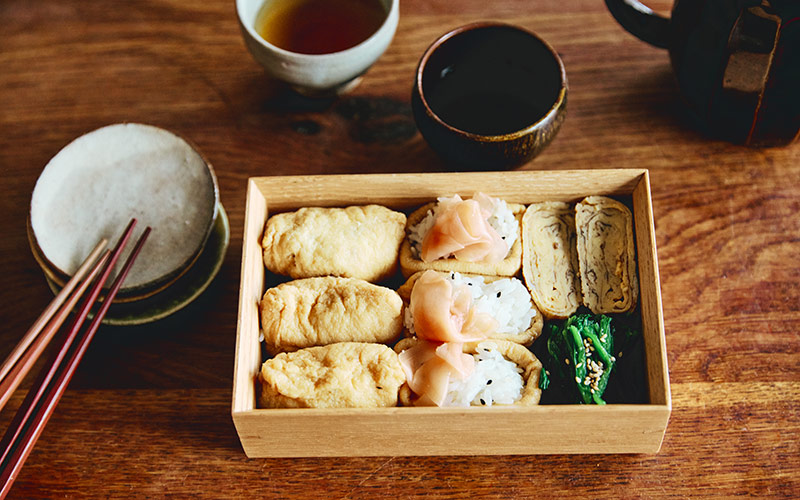
We begin with one of the most familiar combinations. For many people, jubako may feel slightly daunting, but if you think of it as something like a bento box, it immediately becomes easier to imagine.
“I felt it would be nice to suggest a classic set, so I made inari sushi the main element, with tamagoyaki and dressed greens alongside. I have used it rather like a slightly larger bento box.
Today I have packed it quite tightly, imagining it being taken out somewhere, but if you were serving it at home, I would also recommend plating it with a little more space.”
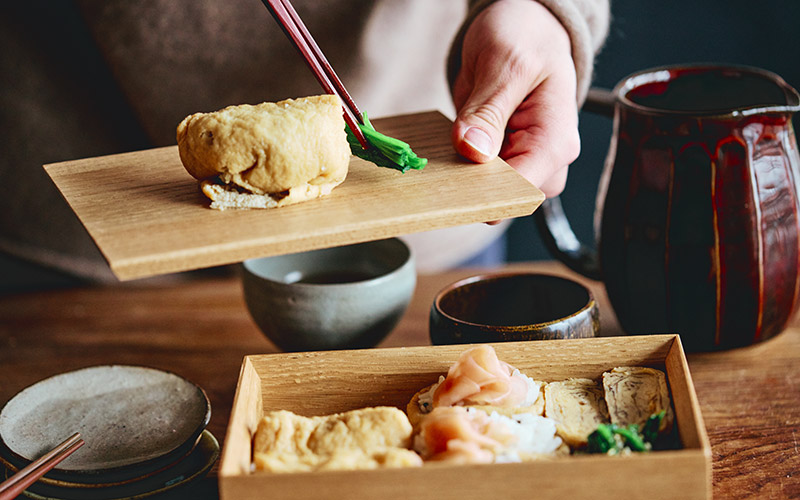
<Item used>
・Omekashi Jubako, Single Tier, Kakishibu Dye
A green salad that brings the table to life
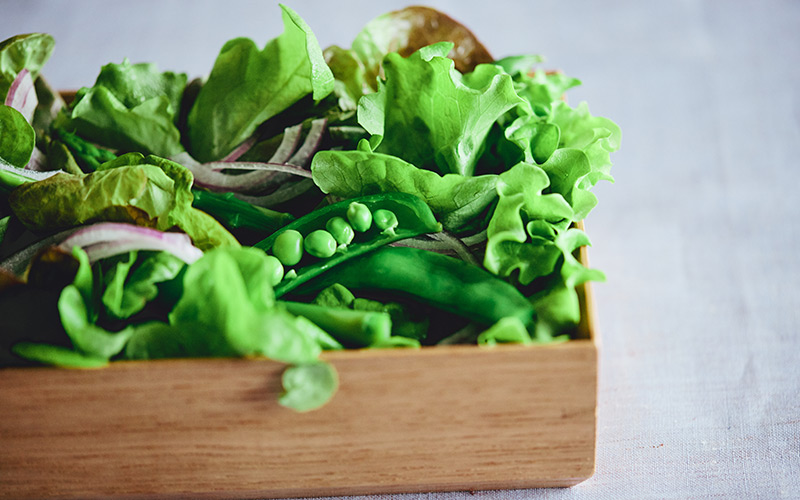
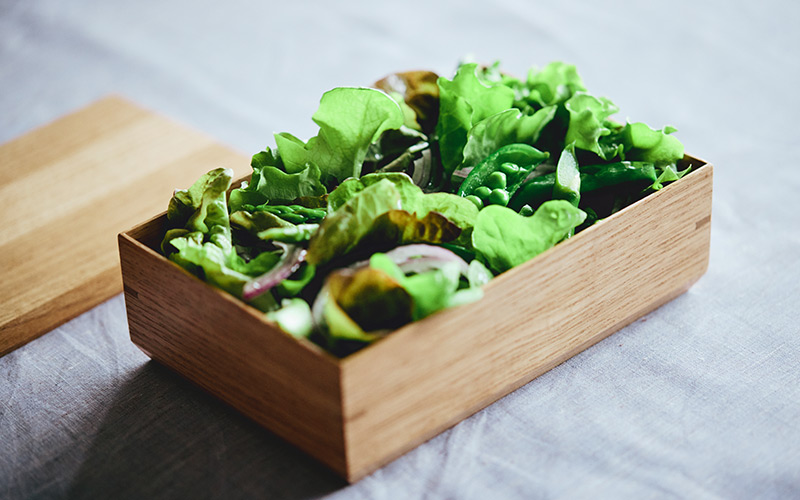
Next, she suggested a fresh and unexpected way of using the jubako: filling it generously with salad. Seeing the jubako in a form we are not used to feels quietly delightful.
“I thought that showing a slightly unexpected pairing might broaden people’s sense of how it could be used, so I filled the jubako with salad.
Salad is often served in a round vessel, but here, by arranging it within a square shape, it looks neat and composed. It feels a little playful too, almost like a small field on the table.”
<Item used>
・Omekashi Jubako, Single Tier, Kakishibu Dye
Baguette, cheese, ham and olives, arranged with quiet elegance for an evening drink
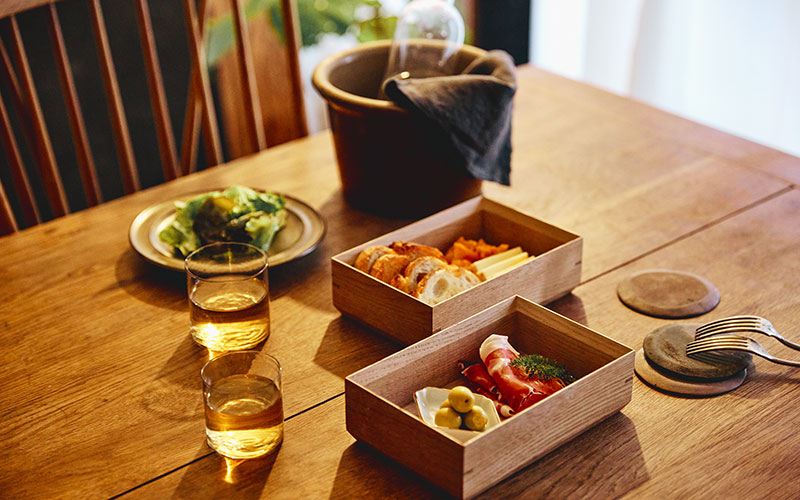
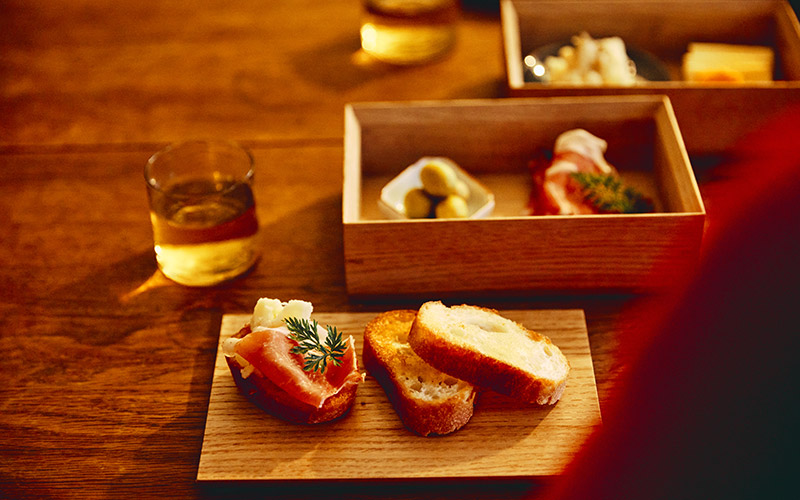
When you would like to enjoy a few different nibbles with a drink, the jubako offers another way to serve them. Its poised appearance lends the moment a quiet sense of occasion.
“When enjoying a drink slowly, either alone or with a friend, jubako can be very useful. Simply placing a few things from the fridge inside, with a little space between them, can create a feeling of a special moment.
You can bring it to the table with the lid still on, enjoy the moment of opening it, and then use the lid as a small plate. This time, I imagined it served alongside wine.”
<Item used>
・Omekashi Jubako, Single Tier, Kakishibu Dye
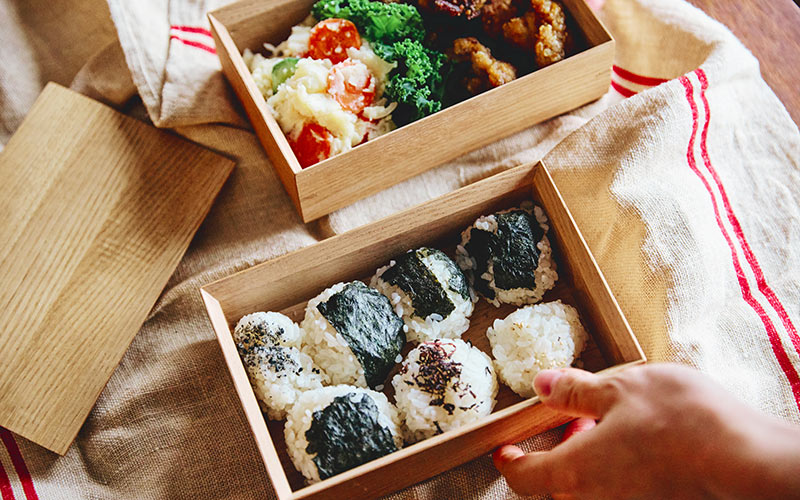
Rice balls and fried chicken for an outing mood
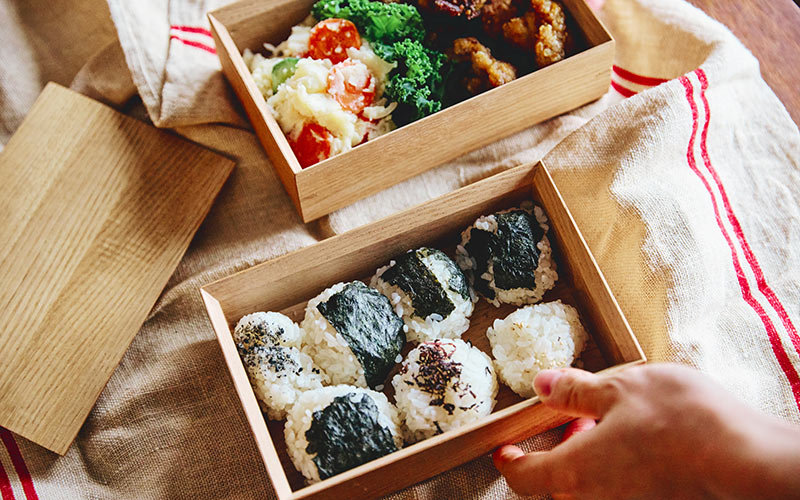
“Of course it suits outings such as cherry blossom viewing or day trips, but I also thought it would be lovely when having drinks with friends at home, if there were small things to nibble on arranged like this in a jubako.
If you make a good number of rice balls and pack them in, everyone can take as much as they like, and if conversation is flowing, there is no need to interrupt it by saying, ‘Could I have another helping?’” she says with a laugh.
“And because it has a lid, it is also useful for packing meals for family members who return home at different times. Simply having a lid means it does not look like leftovers, and it keeps everything looking neat and beautiful.”
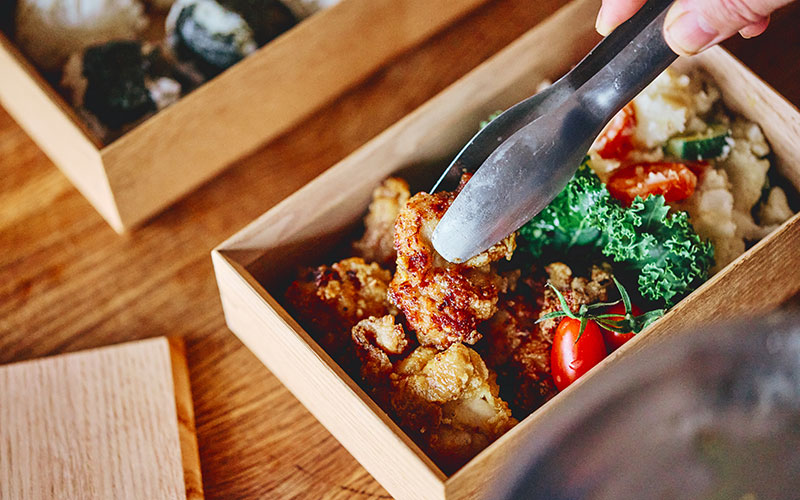
<Item used>
・Omekashi Jubako, Double Tier, Kakishibu Dye
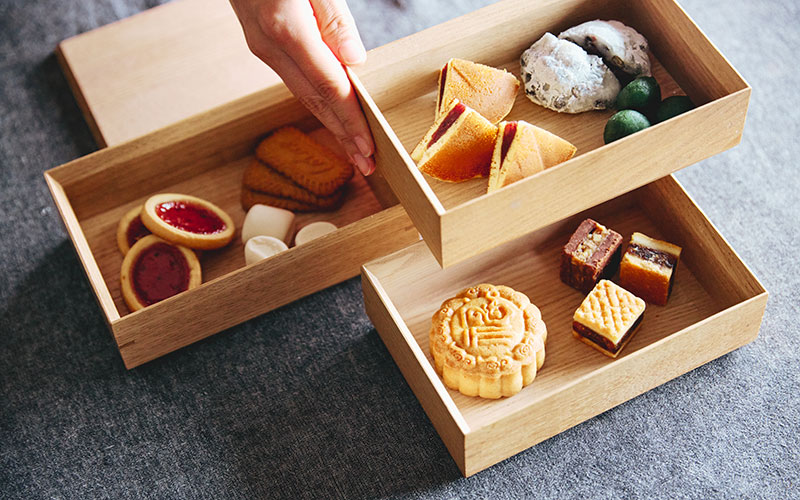
A sweet way to dress the table: a jubako of sweets
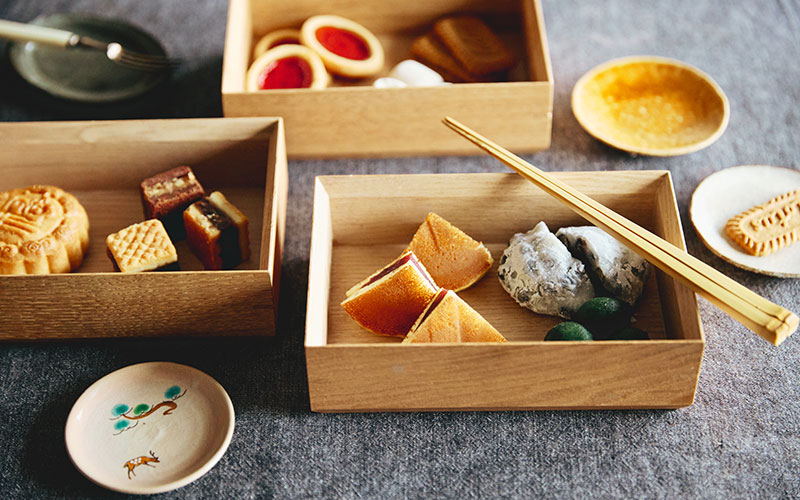
Lastly, one more idea using two tiers. Here, the space inside has been used generously to arrange sweets.
“As a matter of fact, some of these sweets were simply bought at the supermarket. Even things you can buy casually feel more special the moment they are arranged in jubako.
If you bring out this jubako of sweets for tea with friends or family, everyone can help themselves. And if there are some left over, you can simply put the lid back on and leave them there. I think that ease is one of the good things about jubako.”
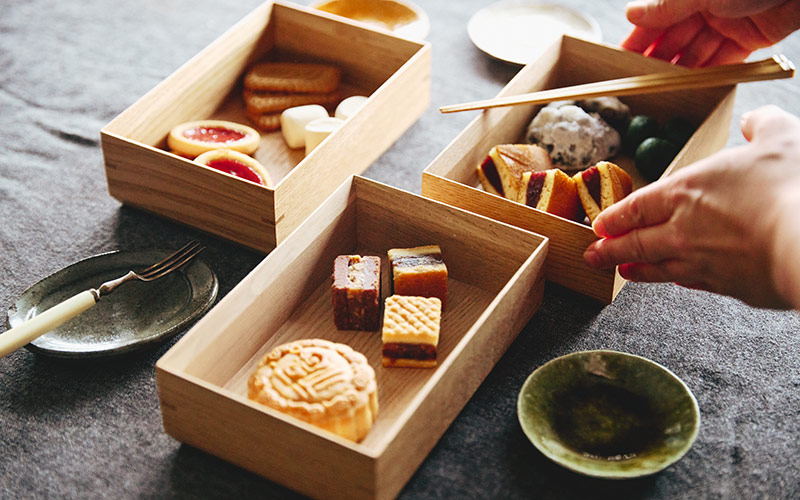 <Items used>
・Omekashi Jubako, Single Tier, Kakishibu Dye
・Omekashi Jubako, Double Tier, Kakishibu Dye
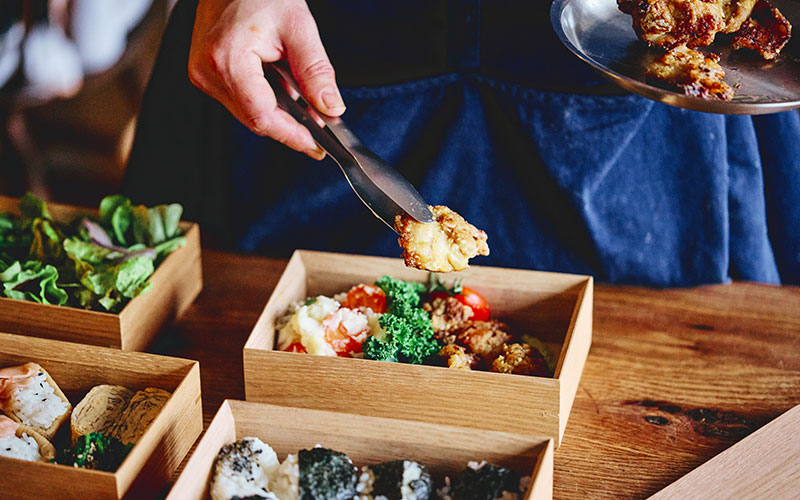
Nagao-san, now that you have tried the newly developed Omekashi Jubako, how did you find it?
“People often say jubako are useful for picnics, but in reality, we do not go on picnics all that often, do we?” she says with a smile. “That is why I think the important thing is how to use them in everyday life.
Of course, the dishes I have shown here could also be served on ordinary plates, but having a lid gives even small things a more refined appearance. It adds a certain brightness.
If I were to offer one tip on how to pack it, it would be to begin with ‘one kind of food per compartment’. If you think you must fill it with lots of different things, it can feel daunting. But it is perfectly fine to start with just rice balls, or just fried chicken. Once that begins to build into two tiers or three, I think it will create a lovely scene. And when you grow more used to it, you can begin dividing the space with leaves and adding a second item.
It is also perfectly fine to pack things in tightly, but once you are a little more accustomed to it, I hope you will enjoy using a little empty space as well. It gives the vessel a sense of openness, and makes the dish appear more special.
In that sense, this jubako has just the right size and shape. It is easy to arrange food in a way that makes use of that space.”
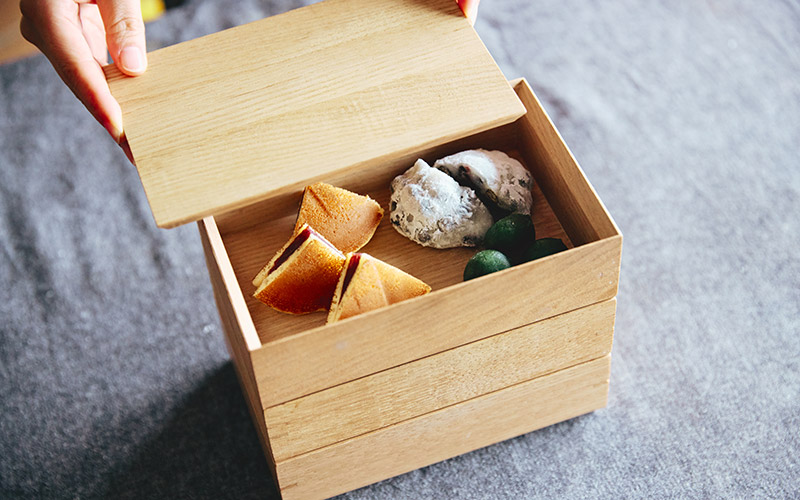
A jubako, with its square form and its lid, brings a quiet sense of occasion into the everyday. It may have felt somehow difficult at first, but following Nagao-san’s lead, that hesitation begins to fall away.
One second to lift the lid, and the meal feels transformed. We hope you will enjoy the particular charm that only a lidded table can offer.
Profile:
minokamo / Akiko Nagao
Food writer and photographer.
Born in Minokamo, Gifu Prefecture. She works between two bases: her home and studio in Tokyo, and an old house in Gifu where her grandmother once lived. In addition to her newspaper column for the Gifu Shimbun, her recent books include Miso Recipes Beyond Miso Flavour (Ikeda Shoten), Wrapped Dishes: Shumai / Gyoza / Nikuman / Oyaki, and Suiton Made with 100 Flour and 50 Water (Gijutsu-Hyoronsha).
https://www.instagram.com/minokamo
Text: Junko Yajiri
Photography: Kazutaka Hamatsu

![Akiko Nagao of minokamo on a Table Set Around “Lifting the Lid” [Omekashi Jubako Edition]](http://nakagawa1716.com/cdn/shop/articles/H1_7859-1_c7cc972b-b4b9-427c-93fb-7adbee4160ec.webp?v=1783934968&width=1066)


