

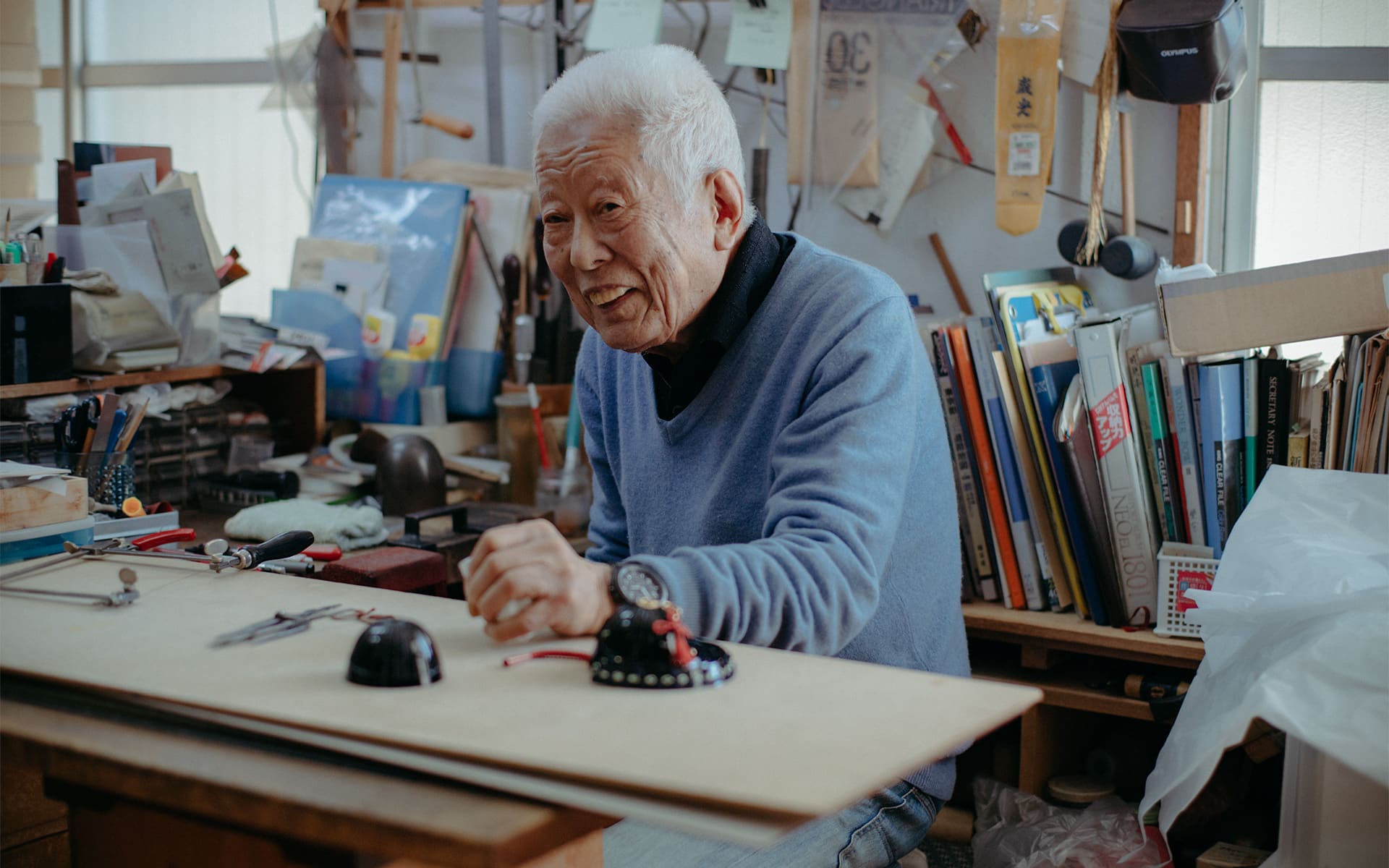
Children’s Day on 5 May is nearly here. In Japan, it is celebrated as Tango no Sekku, with various customs observed in the hope that boys will grow up in good health. As it falls during the season when iris flowers are in bloom, it is also known as the Festival of Iris.
The word shobu in “iris” shares its sound with shobu, meaning to value martial spirit. For this reason, Tango no Sekku came to be widely celebrated among samurai families. In time, the custom spread among ordinary households, and the display of ornate dolls and helmets also grew from this samurai tradition.
Because armour was an important tool for protecting the body, it also came to carry a wish: that it might protect precious children from illness and misfortune, and that they might grow up well.
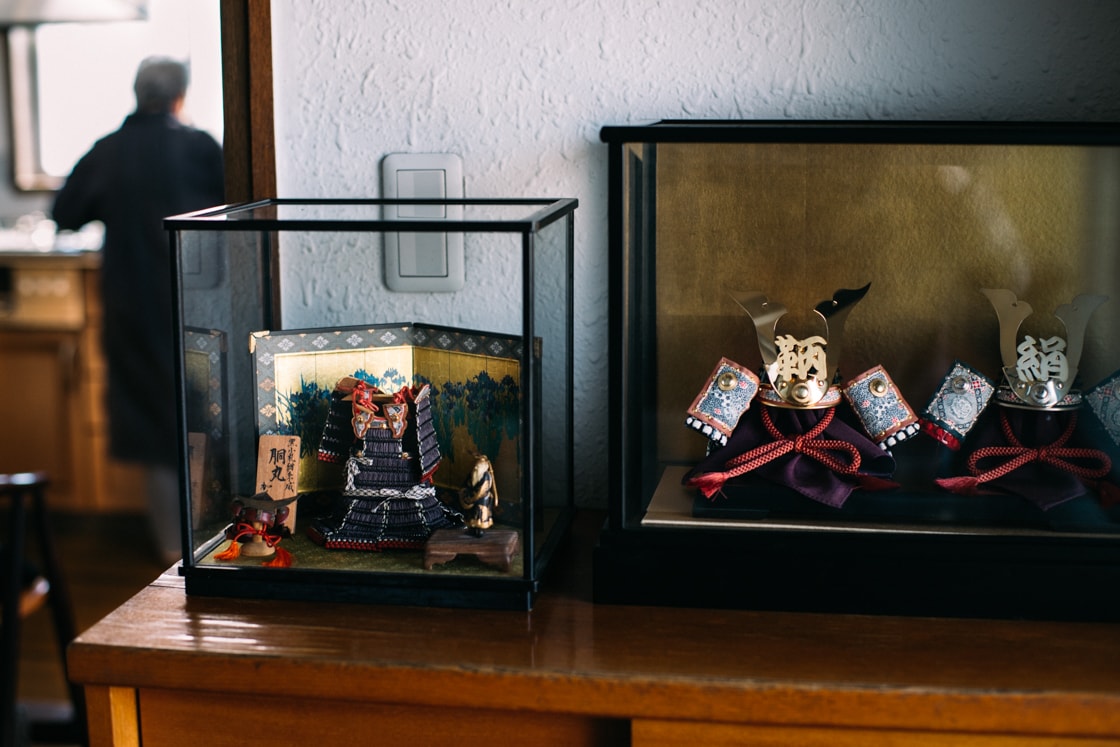
This time, we visited the workshop of Edo armor maker Tomomi Kato, who creates helmets and armor for display at Tango no Sekku. Mr Kato makes helmets from periods ranging from the Heian era to the Edo period, with a level of completion said to be so high that few other makers are able to match it.
Researching armour making through journeys across Japan
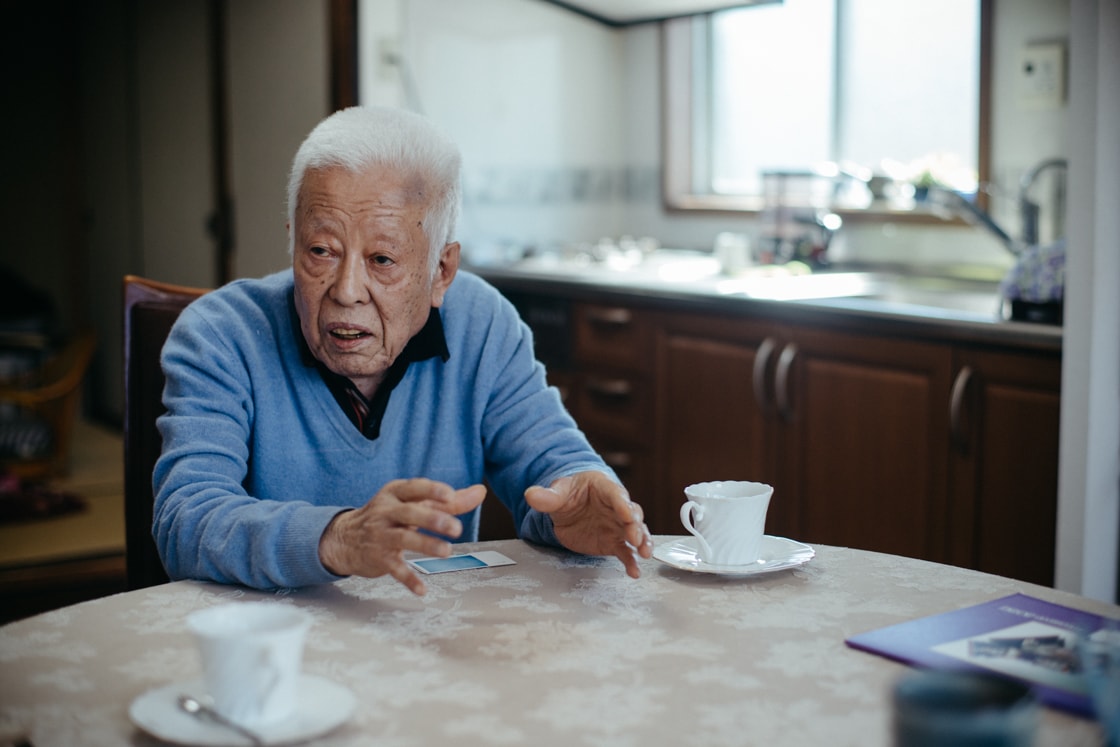
Tomomi Kato was born in Kita Ward, Tokyo, in 1934, and trained under his father, the first-generation maker Ichiju Kato. To verify the armour references that his father had collected while travelling across the country, he has conducted his own research, visiting museums, exhibitions, shrines, and temples.
“When there was an armour exhibition at a museum in Kyoto, I went for two days. I would sketch whilst looking at the armour. Photography was strictly forbidden. I had to check things like how many kusazuri plates there were—the skirted sections hanging from the cuirass. Then the guards would tell me off. They did not know what an armour maker was, so even when I explained who I was, they did not understand,” Mr Kato recalls.
If one visit did not fully satisfy him, he would go back again. In the past, he says, it was sometimes possible to handle the pieces directly. But as many have since been acquired by local authorities or designated as National Treasures, there are now many cases where the real objects can only be viewed through glass.
Even with such difficulties, Mr Kato has continued to make Edo armour.
What is the difference between Edo armour and Kyoto armour?
Armour and helmets can be divided into several types according to how they are made, but the two best known are Edo armour and Kyoto armour.
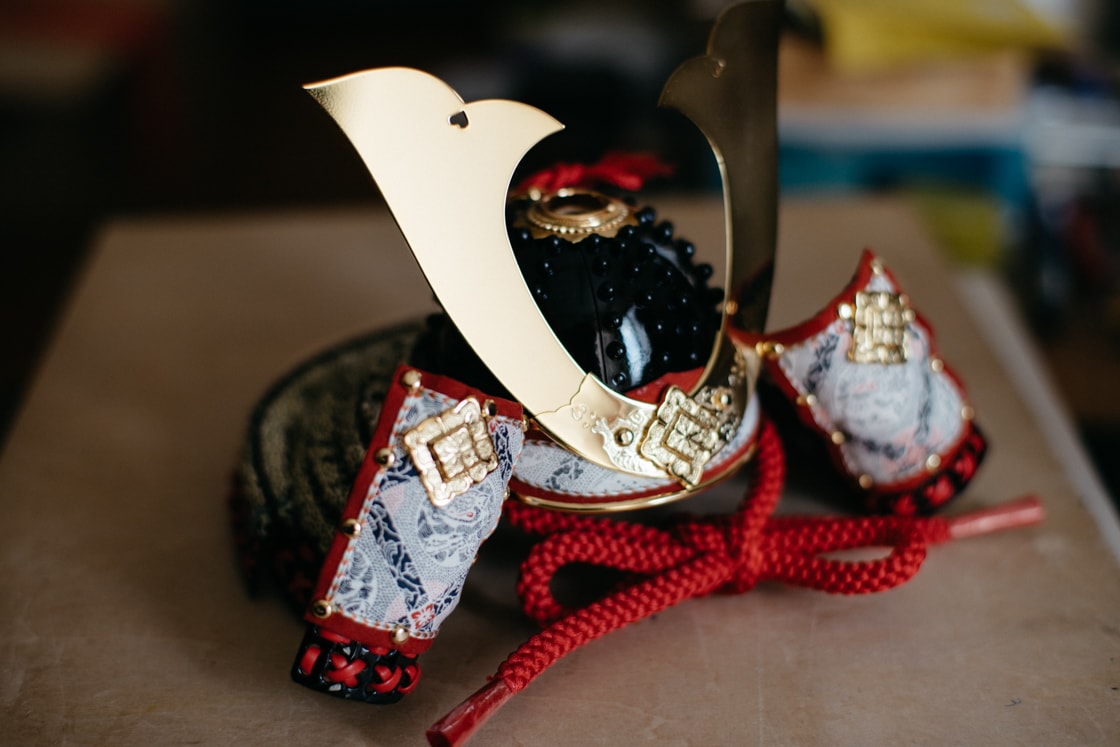
Edo armour developed within samurai society, and is characterised by a solid, powerful presence. Edo armour makers such as Mr Kato study historical sources closely, using even the same types of leather as those of the original period in order to recreate them faithfully. Because the original forms are rendered in miniature, the structure remains true enough that they could in fact be worn.
In contrast, Kyoto armour emerged from aristocratic culture in Kyoto. Made primarily for display, it has a more decorative quality, often with generous use of metal. Throughout, one also finds elements of Kyoto’s traditional crafts, such as Nishijin weaving, braided cords, and foil decoration.
Refined Kyoto, robust Edo. The nature of each place can be seen in the work itself.
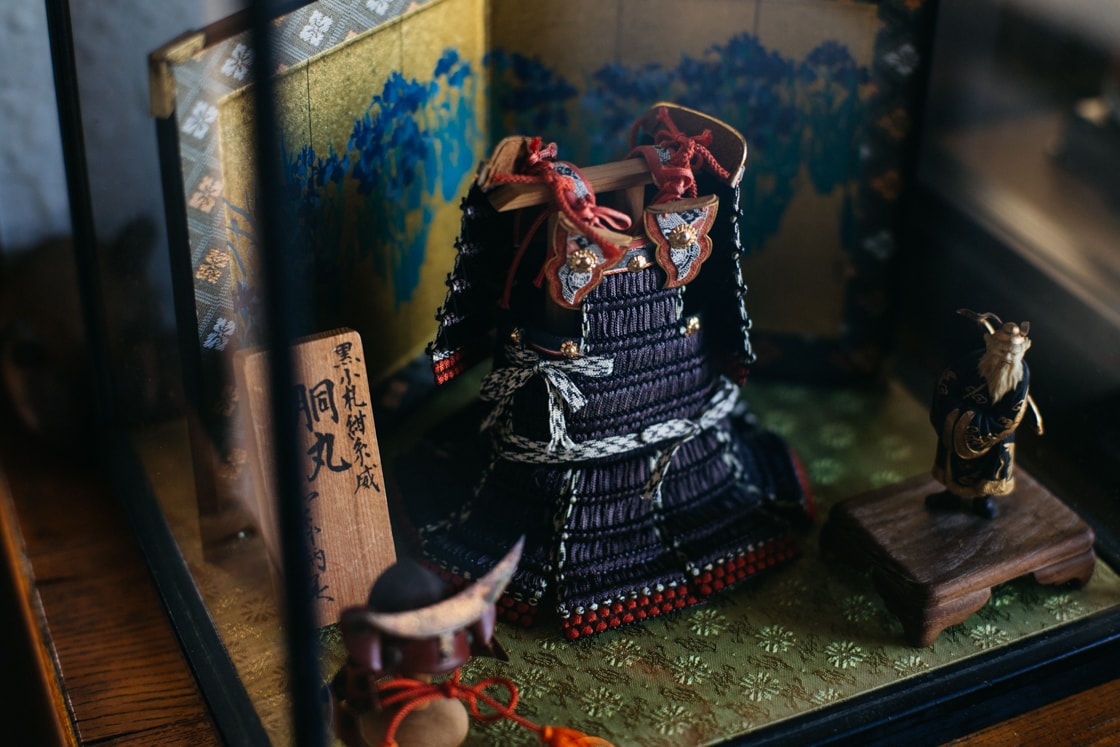
How armour changed over time
Armour changed not only from place to place, but also across different periods.
“The most elaborate armour was made from the late Kamakura period to around the middle of the Muromachi period. That was because it was made not to be worn, but to be dedicated as an offering. So the cords and patterns were often very vivid and decorative.”
The history of battle is also the history of weapons. From bows and arrows came swords, spears, and then firearms. As weapons became more powerful, armour too had to become stronger in order to protect the body. Yet in the Tokugawa era, warfare came to an end. Even so, when a boy was born, a helmet or suit of armour would still be made. It was during this period that the wish for a boy’s healthy growth came to be expressed through these objects.
For example, there is very little visible change across the helmets of the fifteen Tokugawa shoguns. Even so, perhaps fashions of the time did play a part. The colour of the cords might differ, and in some cases bear fur was used as ornament.
“In the Tokugawa period, the cord colours are all rather subdued. Perhaps they were practising frugality in every era. I cannot say for certain,” Mr Kato says with a smile.
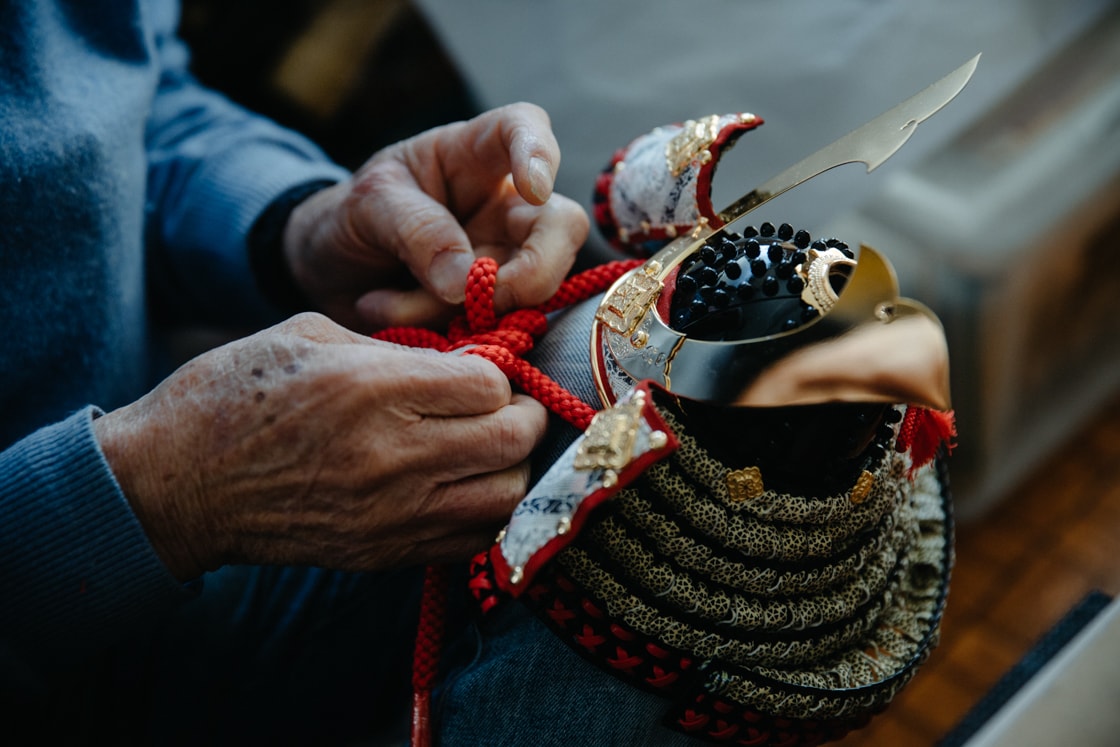
Does armour reflect the character of the commander?
Armour changes with the times, but differences can also be seen from one military commander to another.
“At the top of the helmet there is an opening called the hachimanza. In the case of Oda Nobunaga, there were as many as five Oda mokko family crests arranged around it. Nobunaga was stylish overall,” says Mr Kato.
And what of Toyotomi Hideyoshi?
“Hideyoshi was flamboyant. But he also had near-identical armour made for his body doubles—what were known as the armour of the seven riders. Even so, there would be the slightest variation: the dragon painted on the chest facing a different way, or silver maki-e on a flower on only one side.”
And Tokugawa Ieyasu?
“There was nothing especially showy about his armour. He used to carry large sums of gold with him, so he did not make his helmets heavy,” says Mr Kato. It reveals something of Ieyasu’s practical nature.
For military commanders of the Warring States period, helmets and armour were not only protective equipment, but also a means of expressing themselves. On the battlefield, where life and death stood face to face, how could one draw fortune to one’s side? Helmets and armour carried the pride, faith, and resolve of those who wore them.
Does a miniature require a certain untruth?
To make a helmet or a suit of armour, one must draw on many different techniques, from metal fittings to lacquer. Armour making is, in that sense, a composite art.
When making miniatures, it becomes all the more technically demanding. Mr Kato says there are times when it takes five days simply to thread the cords of a domaru cuirass.
“If you try to make it exactly to scale, the balance becomes poor. At some point, you have to allow a kind of untruth. It is not armour, but take for example the raised curls on the Great Buddha in Nara. Those are called rahotsu, the rounded curls of the hair, and the ones at the top are a different size from those at the front. If the curls at the top were not larger, they would not appear the same because of perspective.”
It is by introducing such slight departures that the balance is preserved. Much delicate thought lies within the work.
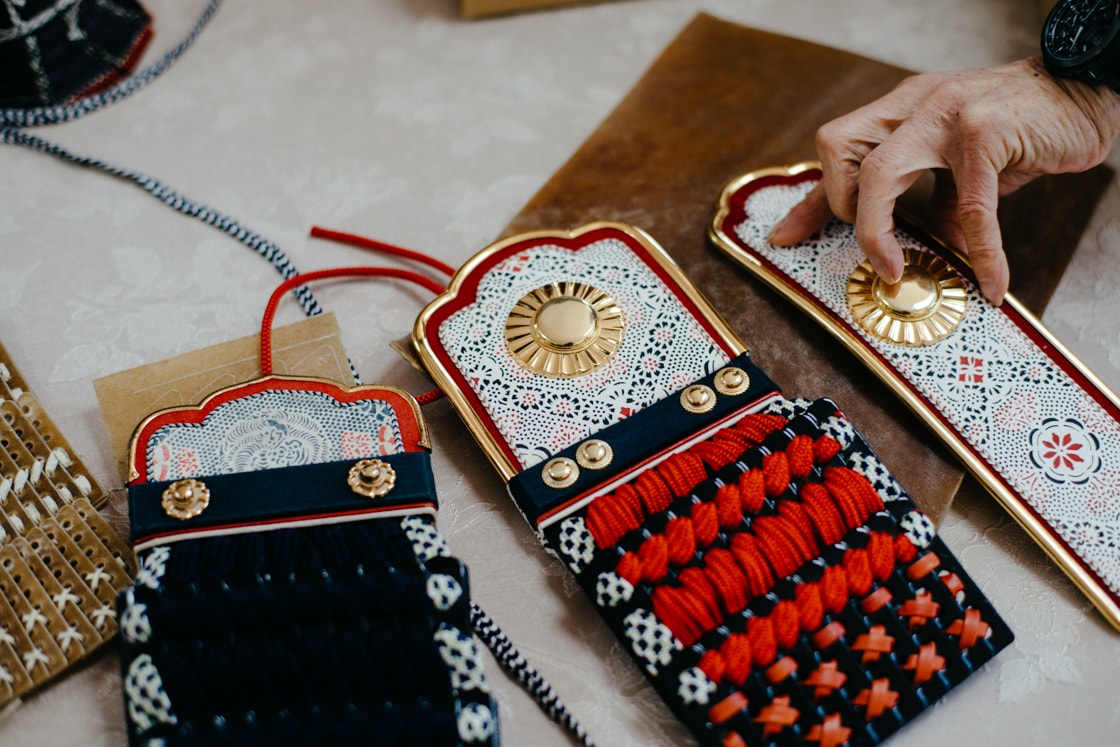
Traditional tools fill the workshop
We were also shown around the workshop. A wide range of tools lined the space, all well used and clearly trusted.
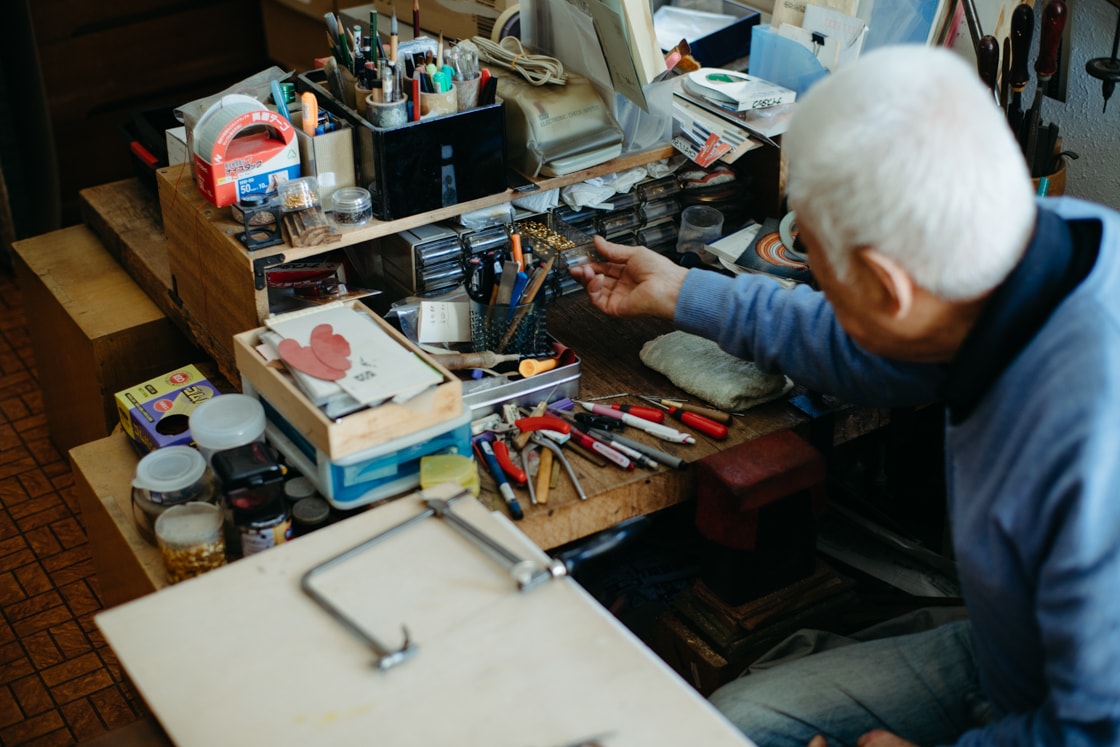
“Scissors made today do not cut properly. In the past, blacksmiths made them by hand, but now they are machine-made, and the tempering is oddly hard. Too hard, in fact. If you use them to cut the legs of a rivet, they chip,” Mr Kato says, shaking his head.
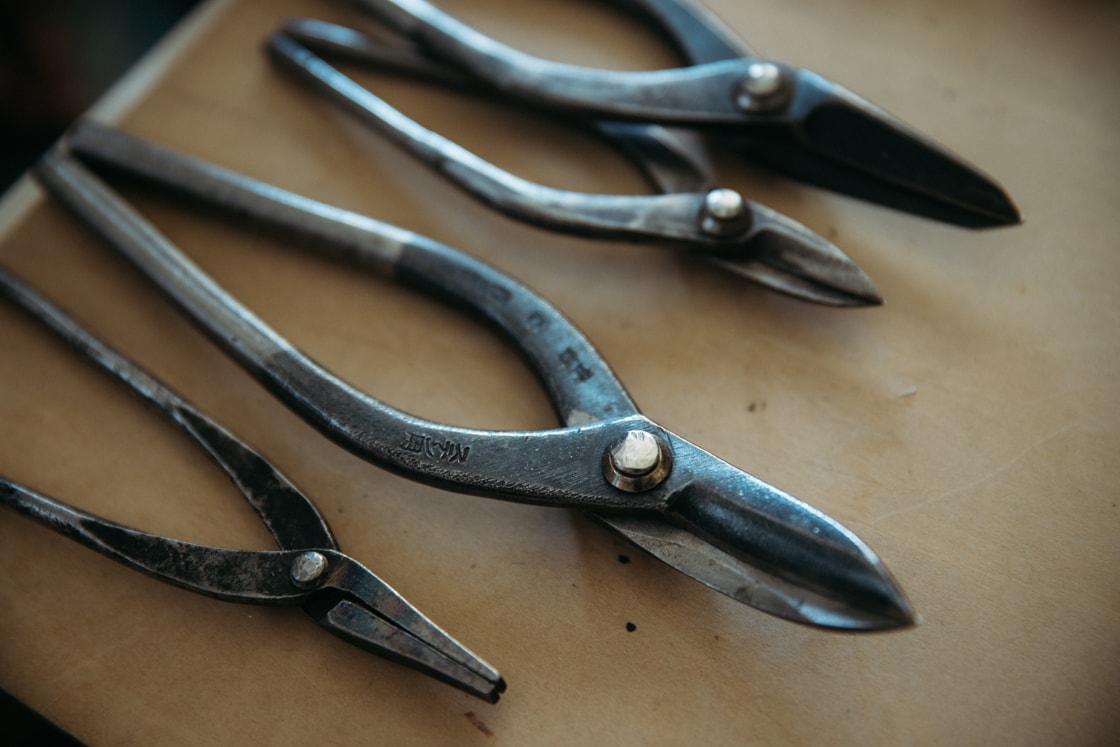
“This hammer I bought when I was seventeen. The inside is soft iron, with about 5mm of steel fixed to the striking face. The sound is completely different. Modern ones are made entirely of steel, and are too hard, so they bounce when you strike.”
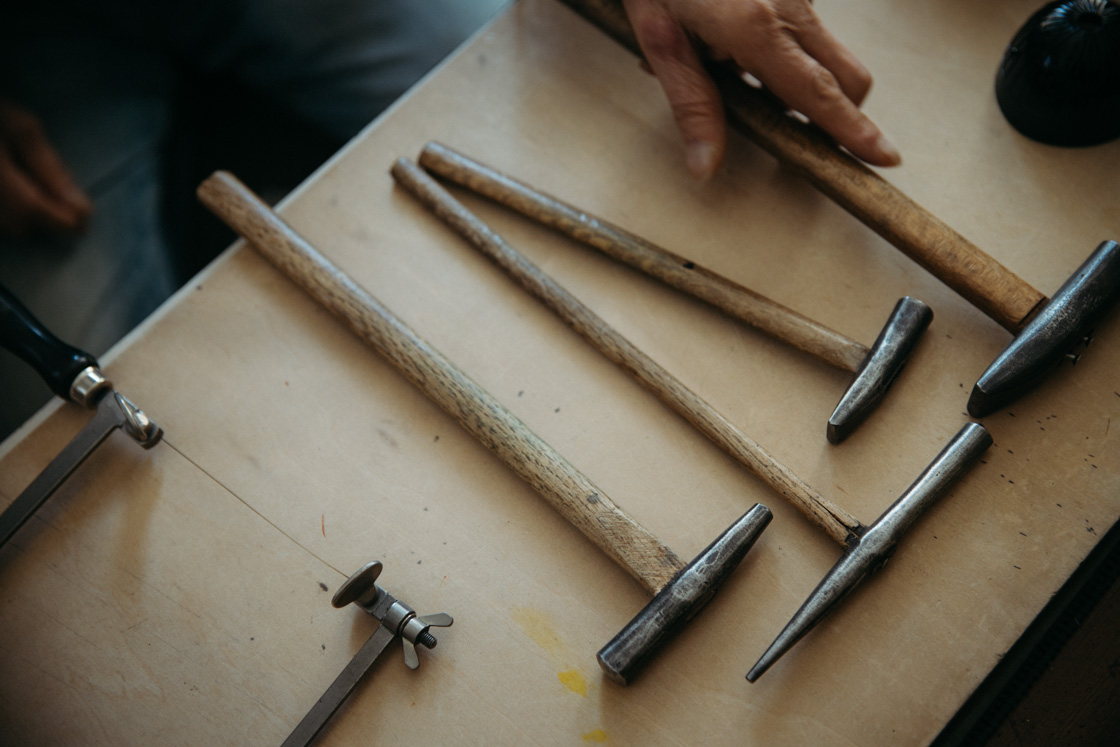
As traditional tools have disappeared, so too have the craftspeople who knew how to use them.
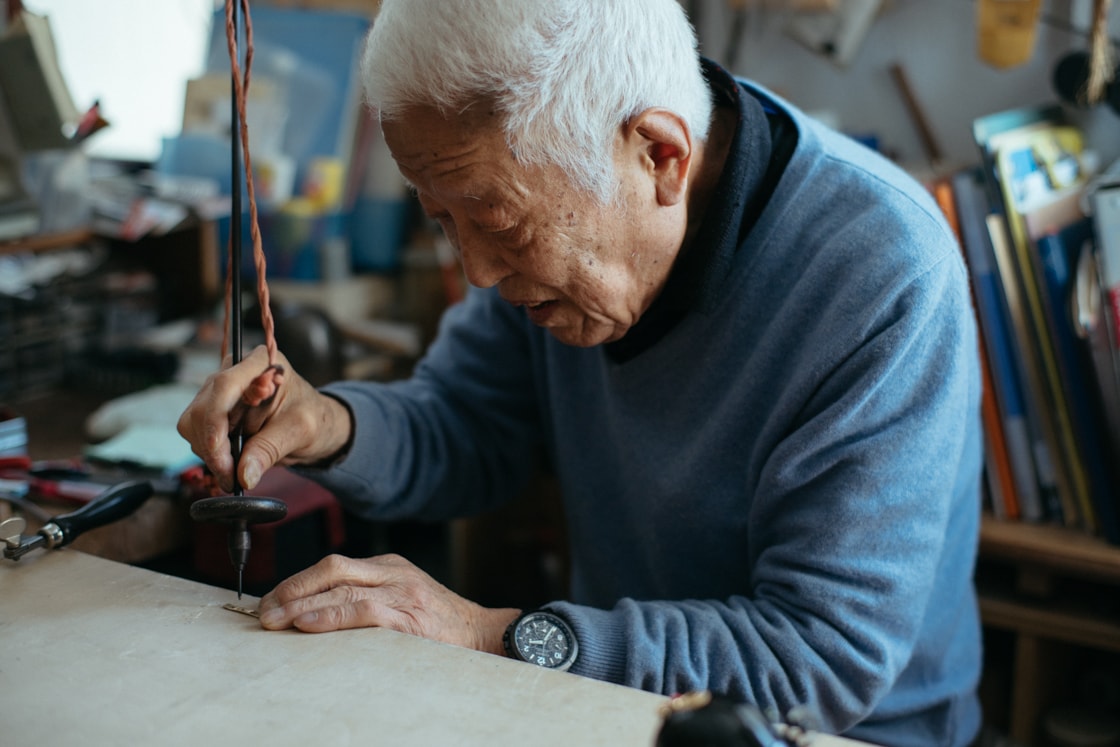
Learning the work by watching from behind
Mr Kato learned the craft by watching his father’s back.
“My father would pass down files that had become a little less sharp from use and tell me, ‘Make it the same with this.’ Then, when he was not around, I would look at the tools he was using, and they were far sharper. After that, I thought I would not be beaten. I began making the things my father had not made.”
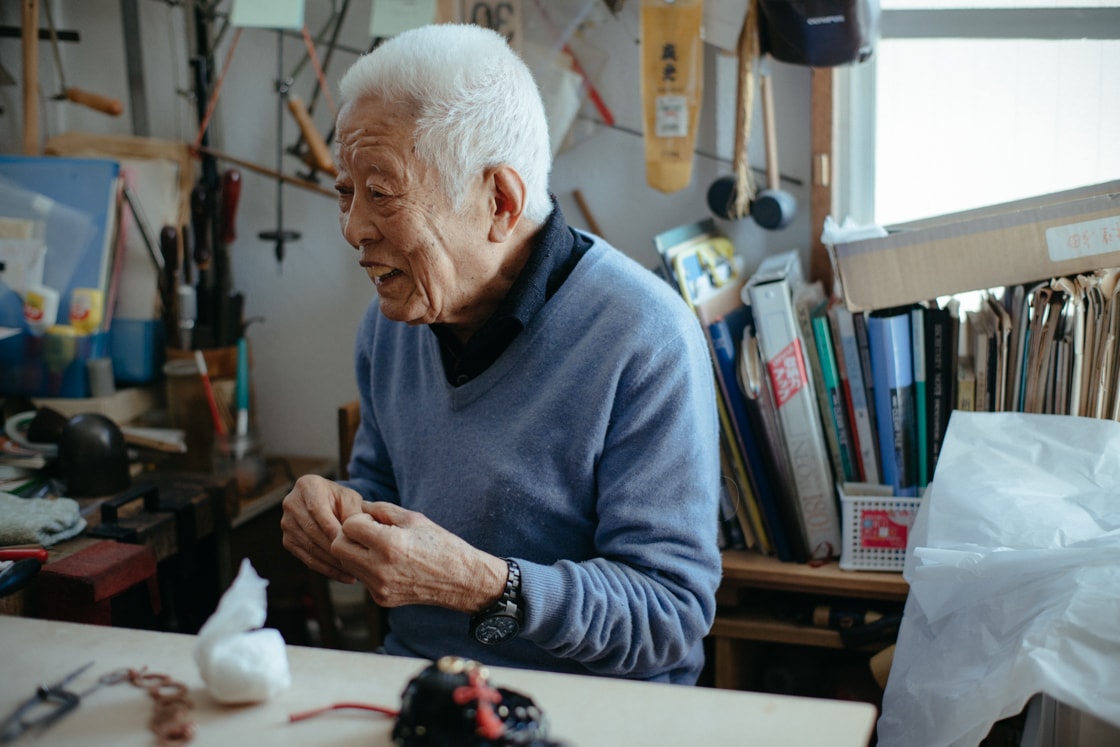
Competitive by nature and dedicated in his study, Mr Kato has pursued every detail, from the tools he uses to the finest elements of construction. Today, he creates Edo armour that only he can make. One cannot help but feel respect for the way he continues his research even now.
<Interview cooperation>
Tomomi Kato
2-26-9 Mukogaoka, Bunkyo-ku, Tokyo
03-3823-4354
Text: Seiji Kajiwara
Photography: mitsugu uehara
Address
2-26-9 Mukogaoka, Bunkyo-ku, Tokyo

![Akiko Nagao of minokamo on a Table Set Around “Lifting the Lid” [Omekashi Jubako Edition]](http://nakagawa1716.com/cdn/shop/articles/H1_7859-1_c7cc972b-b4b9-427c-93fb-7adbee4160ec.webp?v=1783934968&width=1066)


